


What is Nicotine Replacement Therapy?

Author : Louise Johnson
Published: -
Updated on:
Are you in United Kingdom?
We'll take you to the correct store. Change your region if needed.
Author : Louise Johnson
Published: -
Updated on:

If you have ever tried to quit smoking or vaping cold turkey, you know how incredibly loud physical cravings can get. Your chest feels tight, your focus disappears, and your mood swings wildly.
This happens because your brain is reacting to sudden chemical withdrawal. When you try to overhaul your daily habits and fight off intense physical distress at the exact same time, the odds are stacked against you.
This is where Nicotine Replacement Therapy (NRT) steps in. It is one of the most thoroughly researched, clinically proven tools to help you transition away from tobacco. In this guide, we will dive deep into what NRT is, how it works in your body, the different options available, and how to build a quitting strategy that actually sticks.
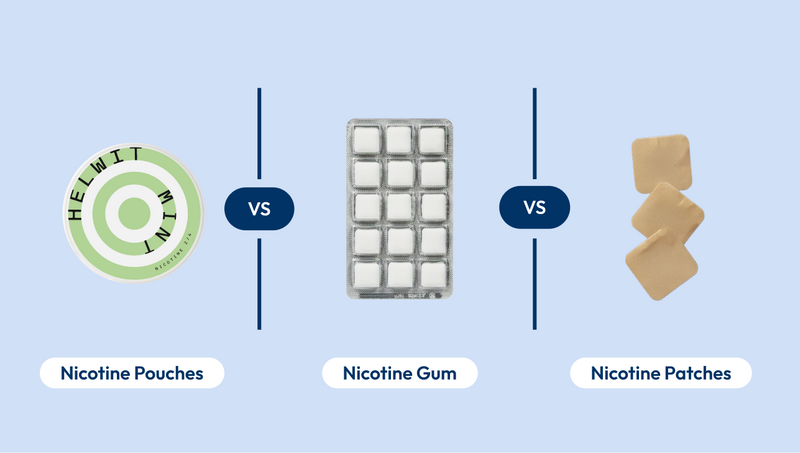
To understand NRT, you have to separate the addiction from the harm.
Nicotine is the chemical that makes tobacco highly addictive. It triggers the release of dopamine in your brain, creating a temporary feeling of pleasure and relaxation. However, nicotine itself, while highly addictive, is not what causes the cancer, lung disease, or heart damage associated with smoking.
Those diseases are caused by the thousands of toxic chemicals present in tobacco smoke, including:
NRT is a medical treatment that provides you with low, controlled doses of nicotine without any of these toxic chemicals.
By satisfying your brain's physical chemical dependence in a clean way, NRT strips away the physical misery of withdrawal. This frees up your mental energy so you can focus on breaking the psychological habits of smoking, like holding a cigarette, smoking while driving, or using puffing as a stress coping mechanism.
Nicotine replacement therapy works by interacting directly with the nicotine receptors in your brain, supplying them with a clean, low level of nicotine to prevent the onset of severe withdrawal symptoms like intense anxiety, irritability, and physical cravings. Unlike cigarettes or vapes, which deliver a rapid, spike-inducing rush of nicotine to the brain within seconds, NRT products release nicotine into your bloodstream much more slowly and at a much lower concentration.
This gentle delivery mimics the baseline presence of nicotine without reinforcing the fast, addictive "reward loop" associated with smoking. Over a period of 8 to 12 weeks, you systematically reduce the strength of your NRT product, gradually weaning your brain off the chemical altogether until your physical dependence is completely broken.
Different people have different quitting styles. Some people want a "set-it-and-forget-it" option, while others need something active to do with their mouth or hands when a sudden craving hits. Because of this, NRT is divided into two categories: long-acting and short-acting therapies.
Available at Two Wombats: Nic Nac Nicotine Lozanges
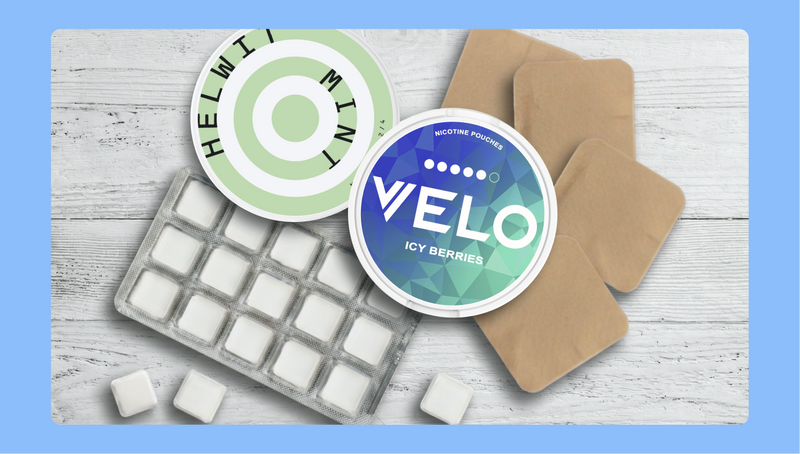
To get the absolute most out of your therapy you can
"NRT is just as dangerous as smoking."
False. Nicotine itself is addictive, but it does not cause cancer, emphysema, or the cardiovascular devastation of smoking. NRT is a clean, medically supervised way to deliver nicotine without the toxins.
"I will just get addicted to NRT instead."
Highly Unlikely. Cigarettes are engineered to deliver a massive spike of nicotine to your brain in under 10 seconds. NRT products deliver nicotine much more slowly and at much lower peaks, making them far less addictive and much easier to step down from.
"NRT doesn't work for me; I tried it once and failed."
Re-evaluate. Most people who fail with NRT either used too low a dose, didn't use combination therapy, or stopped using the products far too early. Quitting is a journey—adjusting your NRT setup can make all the difference.
Already have an account? Login
Add at least 1 item to checkout
You have free cans in your cart but need at least 1 regular item to proceed to checkout. Free cans cannot be purchased alone.